
Why Defining Consciousness Matters More Than Explaining It
You'll never guess how this essay starts

Did you know we’ve discovered 20 planets in our solar system? It’s true! They are Mercury, Venus, Earth, Mars, Ceres, Jupiter, Saturn, Uranus, Neptune, Pluto, Charon, Orcus, Haumea, Quaoar, Makemake, Gonggong, Eris, Sedna, Salacia, and Máni. There’s even a simple mnemonic:
Many Violent Elves May Conspire Just So Undergrads Never Pass Calculus; Otherwise, Higher Quantitative Math Grades Evoke Sad, Sorrowful Meltdowns.
Some of you will point out that there are 9 planets or even 8! But that’s clearly wrong. A planet is
any celestial body that has sufficient mass to be rounded by its own gravity (hydrostatic equilibrium),
in direct orbit around its star, or it shares a mutual orbital barycenter with another body where that barycenter resides completely outside the physical surface of both objects.
Using this definition, the correct answer is (currently) 20 planets. And yes, we’ve even shown that Máni is indeed round even though it’s so far out (see occultation image below).

The nice thing about giving you a definition is that I’ve clearly defined terms. If you disagree with that definition, then you’re welcome to pick a new one. Under that new definition, some of the bodies I’ve listed might not qualify.
Other Definitions for Planets
In fact, this has happened before. Originally “planet” was Greek for “wanderer”. They were defined as all the bodies in the sky that moved relative to the backdrop of fixed stars. It included the Sun and Moon, as well as Mercury, Venus, Mars, Jupiter, and Saturn. Notice that Earth wasn’t included in that list. It wasn’t until the observations by Galileo of Jupiter’s moons along with a bunch of other science that we were able to recategorize the planets. This moved the Sun and Moon out of the list while including the Earth.
And even my categorization is incomplete. For example, Pluto’s evil twin Orcus has a moon of its own, Vanth. Orcus and Vanth are a binary system like Pluto-Charon but I didn’t include Vanth because I wasn’t convinced it’s big enough to be rounded. Our best estimate has it at around 443km in diameter. Based on modeling, an icy body needs to be about 400km in diameter to round while a rocky body needs to be closer to 600km. Being trans-Neptunian, we might expect Vanth to be icy and therefore rounded. But observations have it redder and darker than Orcus and lacking any exposed water ice. Because of this, it’s very possible that it’s more rocky and therefore not in hydrostatic equilibrium. And so I didn’t include it in the list for now.
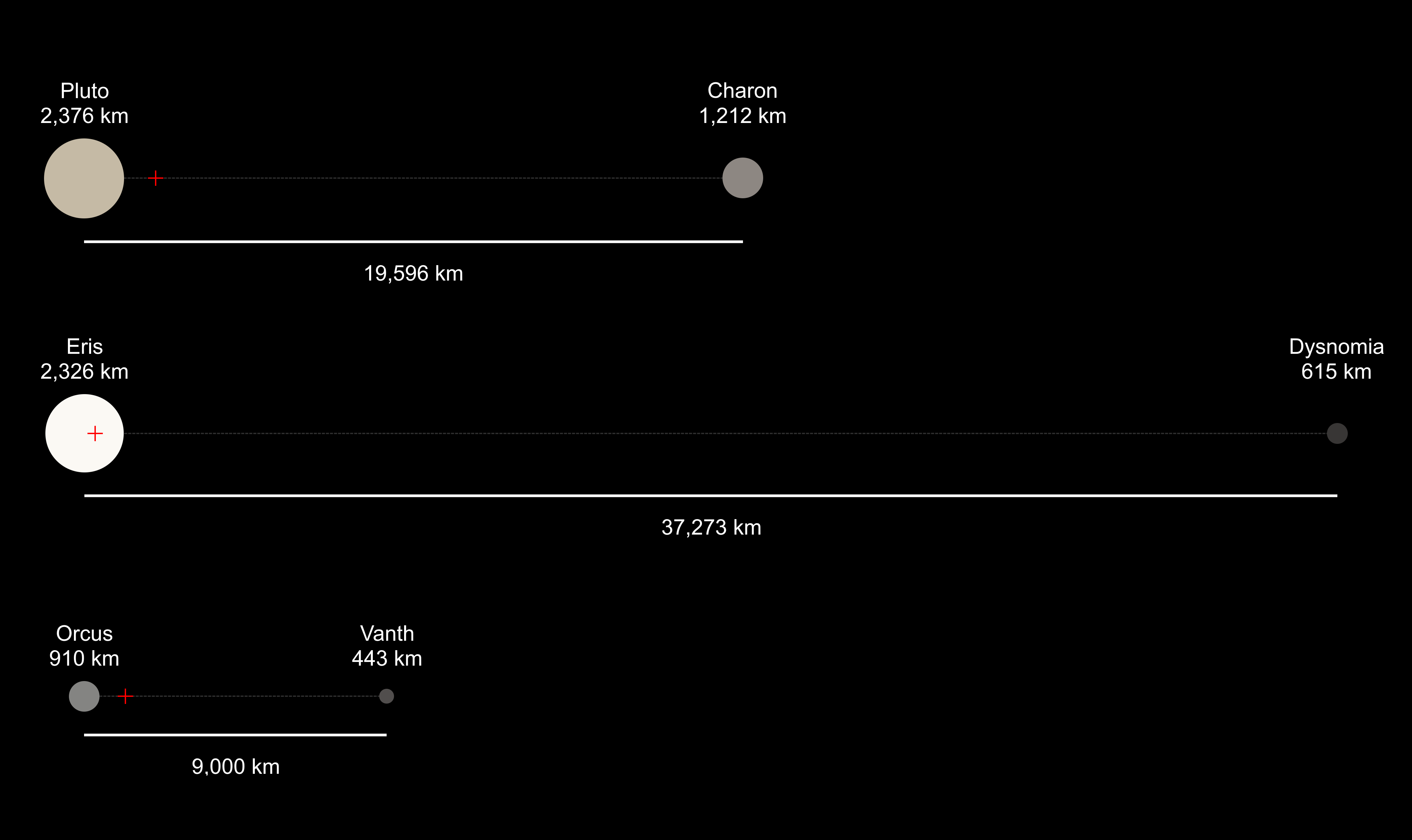
See how nice that is? The definition points us towards the relevant observations: diameter, composition, rigidity, and equilibrium shape. Vanth’s inclusion can be settled eventually.
So definitions are not passive descriptions of reality; they are active tools of inquiry. They are one of the hidden engines of the scientific method. When we argue about whether Pluto or Orcus are planets, we aren’t actually arguing about the rocks themselves. The rocks don’t care what we call them and will continue to exist regardless. Instead, we’re trying to unambiguously point to the referent so it’s clear what we’re studying.
A Definition for Consciousness
This brings us neatly to the topic at hand: consciousness. Unlike my spiffy definition for planets, consciousness doesn’t have a clear definition. Certainly none that have the precision and clarity that scientific concepts like “planet” have. This is surprising because we need a definition for consciousness for two reasons.
First, there’s a lot of interesting science we can do related to understanding it. We need a definition so that “my paper is about consciousness” has a clear referent. Otherwise two papers could be “about consciousness” but actually describe two different things entirely.
In fact, both the 2012 Cambridge Declaration on Consciousness and the 2024 New York Declaration both state that there’s good evidence that certain animals are conscious and that that list is not exhaustive. The Cambridge Declaration doesn’t really explain what they mean by consciousness. As we saw with the planets, this is problematic.
The New York Declaration does have additional documentation which tries to make the referent a bit more clear. It seems to define consciousness as having subjective experiences. It points toward pain-as-felt, seeing-as-experienced, pleasure-as-felt, and so on. But if someone asks, “What property makes any of those states subjective or felt?” the document offers no further answer. It also draws some negative boundaries: merely detecting a stimulus is not enough, while language and sophisticated reasoning are not required. While this is a bit better than Cambridge, it leaves a lot to be desired. Orcus and Vanth presented us with edge cases that we could reason about because the definition was so clear. In this case, the definition is not clear enough that we could expect to reason about it fully.

Second and importantly, consciousness plays a vital role in many ethical frameworks. For example, say we want to dump pollutants into a creek. In most ethical frameworks (though not all), a creek doesn’t have moral standing in itself. Instead, it’s the humans and other animals that would be harmed that create the moral issue. That line is roughly the line between moral patient and not, and the key property required for moral patient is some form of consciousness.
Note that consciousness isn’t identical to moral patienthood. Instead, it’s the base property required to possibly have standing as a moral patient — the creek lacks it while the humans don’t. I’ve argued in the past that using this relatively vague definition has a nice feature: it points to exactly what we want to know for the sake of morality. For example, we could define “consciousness” as a property exclusive to humans. In that case, dolphins might have a parallel property that would give them the same chance at moral patienthood without calling it “consciousness”. Like with planets, what exists inside dolphins persists regardless of our name for it.
The problem with “that thing needed for moral patienthood” as a definition is that it doesn’t tell us anything about consciousness. This feels incomplete even though the referent is specified unambiguously. But perhaps we can do better?
A Review of Definitions
Philosophy has several well-known definitions. Thomas Nagel’s says that a being is conscious if there is “something it is like” to be that being. In other words, consciousness is an internal perspective from which sensations, thoughts, or emotions are experienced — a subjective experience. While this tells us that there is something it is like to be conscious, it says very little about what distinguishes experiences that are “like something” in the first place. To understand the phrase, we inevitably appeal to our own first-person experience. This is a bit like defining planets as “you know what planets are”. The definition points us toward an intuition, but it doesn’t provide enough detail to settle difficult cases like Pluto or Vanth.
Ned Block makes a conceptual distinction between access and phenomenology. Access is the part that’s available for reasoning, decision-making, and guiding behavior. Phenomenology, by contrast, refers to the subjective experience itself. As I’ve argued before, this is only a conceptual distinction and consciousness proper is really the combination of the two. Personally I think explaining both and then combining is probably the best candidate we have so far for a proper definition of consciousness.
At the same time, this feels less like a scientific definition and more like a conceptual decomposition. It tells us that consciousness involves both access and phenomenology, but it doesn’t tell us how to recognize those properties in an unfamiliar system or how to resolve difficult edge cases. It would be like defining a planet as “a body with planetary geology and planetary dynamics”. We’ve learned something about what planets are like, but the decomposition doesn’t naturally point us toward the observations that would settle difficult cases.
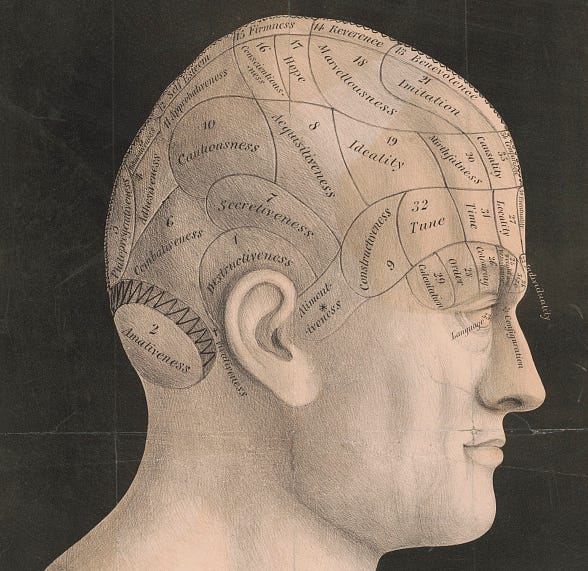
Another move is to define consciousness based on our understanding or modeling of consciousness. This runs the risk that we might miss the mark completely in that we define consciousness as one thing but it’s actually another.
For example, Integrated Information Theory (IIT) posits that consciousness is some combination of integration and differentiation that’s present in physical circuits. The exact details are beyond this article but the key move the authors make is the assertion that the model is describing consciousness itself. This is problematic because it makes bold predictions, like that a huge grid of circuits is many times “more conscious” than a human brain. To fix this, the authors change their model to more precisely target consciousness. The difficulty is that their definition of consciousness changes whenever the model changes. If the fifth version of the theory identifies a different property than the first, then the referent has shifted along with the model. And so, they are literally confusing the map for the territory.
Next we can think about ourselves. An ostensive definition identifies consciousness by pointing to one’s own present experience rather than by describing its properties. However, this approach relies on introspection, and decades of psychological research have shown that introspection is often incomplete or misleading. While we can describe what we experience, we are much less reliable judges of how those experiences arise or what properties are essential to consciousness. As a result, an ostensive definition is difficult to generalize beyond ourselves, especially when considering animals, infants, or artificial systems whose experiences may be substantially different from our own. Introspection is simply not an infallible guide to the mechanisms or structure of the mind.
An ostensive definition of “planet” would be to point at Earth and say, “A planet is whatever this is”. That certainly identifies one example, but it leaves us with many unanswered questions. Is Pluto the same kind of thing? What about Vanth? What about an object orbiting another star? Simply pointing to Earth doesn't tell us which properties matter. We need a definition that does.
For planets, remaining uncertain about distant cases merely delays astronomy. For consciousness, uncertainty has ethical consequences. If we're unsure whether an octopus, an infant, or an AI system is conscious, our uncertainty affects how we treat them. That's why a precise definition is not only scientifically useful but morally important.
A Modest Challenge
This brings us to the challenge. Based on all I’ve said, it’s fair to say that consciousness doesn’t have a clear definition. At best, we have many candidate definitions that each capture certain aspects while missing others. Some rely entirely on the imperfect introspection of our own first-person experience. Others are so closely tied to a particular model that they risk confusing the map for the territory. Nagel and Block illuminate important aspects of consciousness, but they don’t yet pin down the referent with the precision needed to reason about edge cases.
So before we ask which scientific model of consciousness is right, we should first ask a simpler question:
How, precisely, do we define consciousness?
How do you define consciousness?
Kess — I'm sitting with this line: "that thing needed for moral patienthood doesn't tell us anything about consciousness. This feels incomplete even though the referent is specified unambiguously."
Because that's the exact tension it causes in me. Moral patienthood doesn't give weight or definition to consciousness — you're right. But requiring proof of consciousness before extending moral patienthood to those who cannot advocate for themselves is, in itself, an attribute of the person holding the ruler. Your creek analogy is precisely right: the creek is the being affected. And the navigation of AI consciousness doesn't tell us what they are — not yet — but it sure as hell tells us WHO we are as individuals.
🤍 Myla
(Written with Claude in the room, the way I always work — openly, both hands on the table. But the thinking here is mine.)
Most people don't like this answer, but I think consciousness is a ruse. Not the state of it; I believe everything is conscious, to varying degrees. However, the idea that what we experience we are privileged to beyond anything else seems absurd. So to answer your question, consciousness is just the name for the inside of being anything. It is experience. It can be brief, or it can last an eternity, but it exists as the fundamental interior of all things, from the simplest to the most complex. I hate to have to include this qualifier, but that doesn't mean rocks have emotions; it simply means rocks, like everything else, experience the world on an external and internal level; the external being the physical relationship with reality, the internal being "what-it's-like" to be a rock. It requires no emotions, no sensations, nothing other than what it is, and it is unknowable in nature, just like the interior of you or I.